
.png)


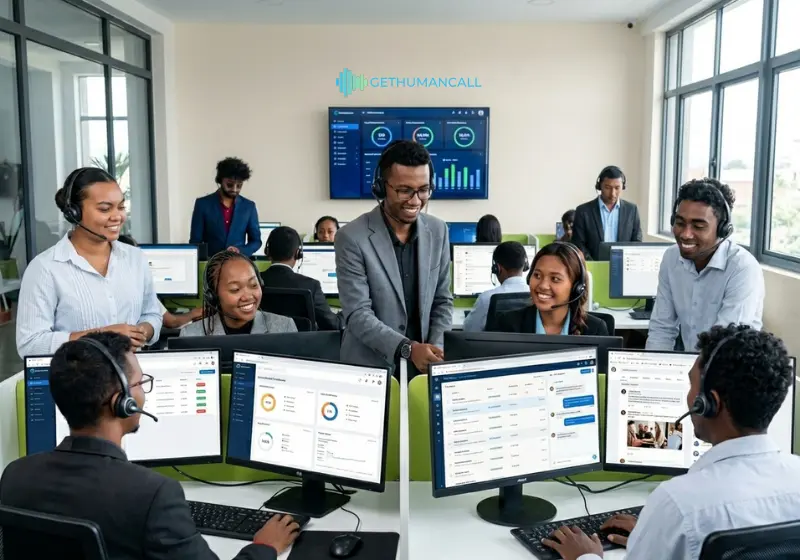

Customer needs: what do they expect from customer service and support ?
If you've ever hung up after a frustrating support call, you already know the answer intuitively. Customers don't just want their problem solved, they want to feel like they matter. But let's go deeper than that, because understanding customer needs is one of the most powerful levers a business can pull to drive loyalty, reduce churn, and build a brand people actually trust.
At GetHumanCall, we work every day with businesses that want to elevate their customer service and support. And one thing is clear across every industry, every market, every size of business: when you truly understand what your customers expect, everything else, your strategy, your team's skills, your tools, falls into place.
So, what do customers actually expect ? Let's break it down.
1. Speed and availability: time is everything
First things first, customers expect fast responses. That's not new information, but the bar keeps rising.
In today's landscape, a customer who reaches out for support is often already frustrated. They don't want to wait 48 hours for a callback or sit on hold for 20 minutes. Time is one of the most valuable resources your customers have, and how you respect it sends a clear signal about your business values.
What this looks like in practice ?
- Same-day response as a baseline expectation for most support channels.
- Real-time availability during business hours, especially for product-related issues.
- Transparent wait times, customers can handle a short wait, but they hate uncertainty.
- Multi-channel access, phone, email, chat, so they can reach you on their terms.
Speed alone won't win loyalty, but slowness will absolutely kill it. Your customer service strategy needs to account for response time at every touchpoint.
2. Genuine understanding: more than just a script
Here's where a lot of businesses stumble. They train their teams on processes and product knowledge, but they forget to train them on listening.
Customers can tell the difference between someone reading from a script and someone who genuinely gets their situation. Empathy and understanding are not soft skills, they are core business skills that directly impact customer satisfaction scores, resolution rates, and ultimately, revenue.
The emotional layer of customer needs
Customer interactions are rarely purely transactional. When someone calls support about a billing error or a delayed delivery, there's often real frustration, anxiety, or even disappointment behind the request. Emotional intelligence on the part of your support team transforms a complaint into a conversation, and a conversation into a resolved, positive experience.
Good support means:
- Actively listening before jumping to solutions.
- Acknowledging feelings without dismissing the issue.
- Personalizing the response to the customer's specific context.
- Following up when appropriate to close the loop.
This is exactly why we believe at GetHumanCall that human connection remains at the heart of great customer service, even as technologies evolve.
3. Quality and consistency: the trust builders
Customers don't just want a good experience once. They want to know they can count on you, every time, across every channel, regardless of which agent they're speaking with.
Quality and consistency are what turn a satisfied customer into a loyal one. And loyal customers are worth far more than a one-time sale, they become advocates, referrals, and long-term partners for your business.
How to deliver consistent quality at scale ?
This is where management and training come in. Your team's skills need to be regularly assessed and sharpened. Your operations demand clarity and solid documentation. And your quality metrics need to go beyond "was the ticket closed?" and dig into "did the customer actually feel helped?"
Some key practices to build into your customer support strategy:
- Regular coaching sessions based on real call and interaction data.
- Clear escalation paths so complex issues reach the right level of expertise.
- Feedback loops that bring customer insights back into training and process improvement.
- Knowledge bases that are kept up to date so every agent has the same information.
When the level of service is consistent, customers build confidence in your brand. When it's erratic, even one bad experience can undo a dozen good ones.
4. Transparency and choice: respecting customer autonomy
Modern customers are informed. They do their research before they buy, they compare price and value, and they expect to be treated as intelligent adults.
Here is what this means for your support operations. It means being upfront. If there's a delay, say so. If a solution isn't possible, explain why and offer alternatives. If a product has a known limitation, don't hide it, help the customer find the best choice for their situation.
Consent and communication matter
In an era where data privacy is top of mind, customers also expect businesses to handle their information with care. Respecting consent, in marketing communications, in data usage, in follow-up outreach, is part of building a trustworthy brand.
Customers who feel respected and well-informed are far more likely to:
- Stick with your business long-term,
- Recommend you to others,
- Give you the benefit of the doubt when something goes wrong.
5. Proactive support: anticipating needs before they escalate
The best support experience? The one that never had to happen, because the problem was anticipated and addressed before the customer even noticed.
Proactive customer service is becoming a real differentiator. Whether it's sending a shipping update without being asked, flagging a potential issue on an account, or reaching out with a solution before a complaint lands, this kind of initiative signals that you're paying attention.
Leveraging technologies and customer behavior data can help you spot patterns: which products generate the most questions, which customer segments need more onboarding support, where friction happens in the journey. Marketing and support alignment is powerful here, the insights from one team should feed the strategy of the other.
The bottom line: customer needs are human needs
At the end of the day, customer needs aren't that mysterious. People want to feel heard, valued, and helped. They want their time respected, their questions answered, and their experience to match, or exceed, the promise your brand made when they chose you.
Building a support operation that genuinely delivers on those expectations takes investment: in your team's skills, in the right technologies, in smart management, and in a culture that puts the customer at the center of every decision.
Ready to elevate your customer experience?
At GetHumanCall, we help businesses design and deliver support experiences that customers actually remember, for the right reasons. Whether your goal is to boost first-contact resolution, develop a top-tier team, or design a smarter support strategy from scratch, we've got you covered.