
.png)


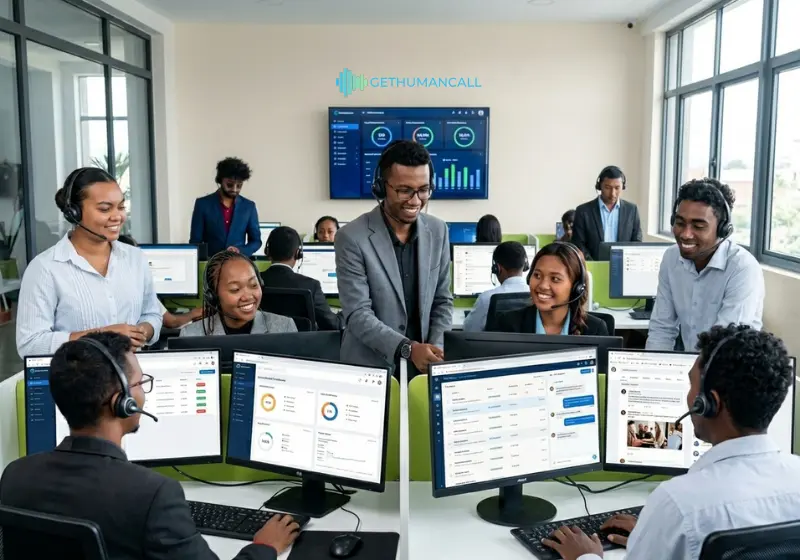

Beyond "BPO Silos": How to Embed an Outsourced Support Team into Your Daily Slack Workflow
For most COOs and Founders, the word "outsourcing" still carries an uncomfortable connotation: a black box. You send tickets over the wall, and answers come back days later from a team you've never spoken to, following a process you can't see. This is the legacy BPO model, and it was built for a different era, one where cost savings mattered more than brand consistency or speed.
Today's SaaS and e-commerce companies can't afford that gap. Customer support is no longer a back-office function; it's a frontline extension of your product and your brand voice. Closing the distance between your internal team and your outsourced one isn't a nice-to-have anymore. It's the difference between an outsourced team that feels like a vendor and one that feels like a natural extension of your team.
Why the "Silo" Model Fails Modern Companies
Traditional call centers were designed around ticket queues and shift reports, not collaboration. Agents worked from scripts they rarely questioned, updates arrived through clunky portals, and by the time an internal team noticed a recurring issue, it had already frustrated dozens of customers.
This structure creates three recurring problems:
- Delayed context: internal teams learn about product issues or angry customers well after the fact, instead of in real time.
- Inconsistent tone: agents trained in isolation drift away from brand voice, since they have no direct feedback loop with marketing or product teams.
- Cultural disconnect: outsourced agents feel like an external cost center rather than a genuine part of the company, which shows in how they handle escalations.
None of these problems are about skill. They're about architecture. A team can be excellent and still underperform if it's structurally cut off from the company it represents.
The Integration Playbook: Making Distance Invisible
Embedding an outsourced team into daily operations isn't about adding more meetings. It's about designing the right communication rhythm so that geography stops mattering.
Asynchronous Communication as the Default
Real-time overlap between time zones is often limited, so asynchronous-first communication has to be the foundation, not the fallback. This means:
- Clear, written daily handoff notes at the end of each shift, summarizing open issues, escalations, and anything the next team should watch for.
- Threaded Slack channels organized by topic (billing, technical issues, VIP accounts) rather than one noisy general channel.
- Documented decision logs, so agents don't need to wait for a live answer to handle a recurring edge case.
Done well, async communication actually produces better documentation than most in-house teams manage on their own, simply because distributed teams are forced to write things down.
Real-Time Feedback Loops
Async doesn't mean slow. The best outsourced integrations pair asynchronous default communication with fast, structured feedback loops for anything urgent:
- Direct Slack access between agents and internal team leads, not routed through an account manager.
- Shared quality scorecards, reviewed weekly, so feedback on tone or accuracy reaches agents within days, not months.
- Escalation channels with response-time SLAs, so a flagged issue never sits unanswered overnight.
This is where the difference between a vendor relationship and a team relationship becomes obvious. Vendors report metrics at the end of the month. Teams flag a problem the moment they see it.
Daily Huddles That Build Actual Culture
Culture doesn't transfer through a handbook. It transfers through repeated, human contact. A short daily or weekly video huddle, even 10-15 minutes, does more for brand alignment than any training document.
These huddles typically cover:
- A quick rundown of product updates or promotions agents need to know about.
- Real examples of great (or tricky) customer interactions from the past 24 hours.
- An open floor for agents to ask questions directly, rather than filing a support ticket about their own support tickets.
Over time, this rhythm turns outsourced agents into people who genuinely know your product, your customers, and your brand's personality, not just your FAQ.
How GetHumanCall Builds This In From Day One
At GetHumanCall, this integrated approach isn't an add-on service. It's the operating model.
Direct Slack and Google Meet integration means client teams talk to their outsourced agents the same way they'd talk to an in-house colleague: same channels, same huddles, same visibility. There's no account manager acting as a translation layer between your team and the people actually answering your customers.
This starts at hiring. GetHumanCall's video-interview selection process screens for more than technical competence. It evaluates communication clarity, cultural fit, and comfort with direct, real-time collaboration, since these are the traits that determine whether an agent will thrive inside a client's existing workflow rather than beside it.
The result is a support team that shows up in your daily standup, understands last week's product launch without being told twice, and represents your brand with the same consistency your internal team would.
The Bottom Line for Operations Leaders
Outsourcing doesn't have to mean losing visibility or control. With the right communication architecture, an outsourced support team can operate with the same transparency, responsiveness, and cultural alignment as an in-house department, at a fraction of the overhead.
The question isn't whether to outsource support. It's whether your outsourcing partner is built to integrate, or built to stay at arm's length.