
.png)


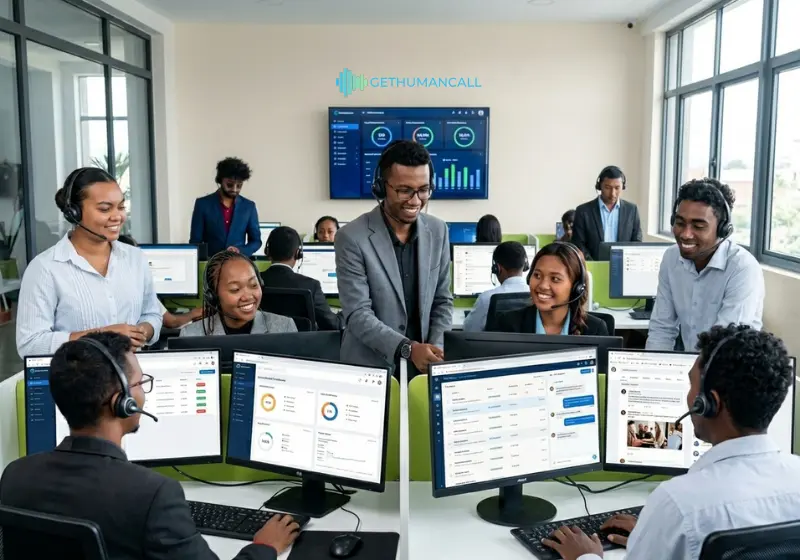

Call Center Operator Responsibilities: Everything You Need to Know
Whether you're hiring for your first customer service team or reconsidering how your business handles client interactions, understanding what a call center operator actually does is more important than most people think. It's not just about picking up the phone. Far from it.
Call center agents sit at the very heart of the customer experience. They're the ones clients speak to when they have a problem, a question, or a complaint. How that interaction goes, whether it ends in frustration or satisfaction, often determines whether a customer stays loyal or walks away for good. That's a lot of responsibility to carry on a headset.
This guide breaks down the full scope of call center operator responsibilities, the skills that separate a good agent from a great one, and what businesses, particularly those exploring outsourcing, should understand before building or expanding their customer service workforce.
Who Is a Call Center Operator?
A call center operator, sometimes called a call center agent or customer service representative, is a professional responsible for managing communications between a company and its clients. Depending on the business, this might involve handling inbound calls from customers seeking support, making outbound calls for sales or follow-ups, or a mix of both.
Inbound vs. Outbound: Two Distinct Roles
Not all call center operators do the same job. There's a meaningful distinction between inbound and outbound agents, and it's worth being clear on both.
Inbound call center agents receive calls from existing or potential customers. Their work is primarily reactive, responding to queries, resolving issues, processing orders, or providing technical assistance. The pace can be relentless, especially in high-volume environments, and the ability to stay calm and solution-focused under pressure is absolutely essential.
Outbound call center agents initiate calls themselves, typically for sales prospecting, appointment setting, customer satisfaction surveys, or following up on previous interactions. This role requires a strong sense of initiative, resilience in the face of rejection, and the confidence to hold a conversation with someone who wasn't expecting to hear from you.
In modern omnichannel contact centres, the line between the two is becoming increasingly blurred. Many agents now handle phone calls, emails, live chat, and even social media enquiries within a single shift, a reality that demands a far broader skill set than the traditional call center role once required.
Call Center Agent Job Description and Core Duties
Behind every successful customer interaction lies a clearly defined set of tasks and expectations. Understanding the full call center agent job description helps businesses set realistic standards and helps agents know exactly what's expected of them, day in and day out.
Standard Call Center Employee Responsibilities & Duties
In a standard call center job description, an agent's daily routine typically revolves around key operational and customer-centric tasks. Whether managing inbound support or outbound outreach, the primary call centre responsibilities include:
- Answering inbound customer queries professionally and meeting target response times.
- Managing outbound customer calls for follow-ups, lead qualification, or satisfaction checks.
- Identifying issues through active listening and ensuring high first-call resolution (FCR).
- Maintaining CRM data accuracy by thoroughly logging interaction details and updating client profiles.
Let's get into the specifics. Here's what call center operators are typically expected to do on a day-to-day basis, and why each of these duties and responsibilities of a call center agent actually matters.
Handling Customer Interactions Across All Channels
At its core, this is what the job is about. Call center agents manage interactions with customers, answering questions, responding to complaints, processing requests, and providing information about products or services. The quality of these interactions directly shapes customer satisfaction scores and, by extension, the company's reputation.
- Answering inbound phone calls in a timely, professional manner,
- Responding to emails, live chat messages, and social media enquiries,
- Making outbound calls for sales, follow-ups, or satisfaction checks,
- Managing high call volumes without sacrificing the quality of each individual exchange.
Problem-Solving and Issue Resolution
This is where the real skill lies. Any agent can transfer a call. A genuinely effective call center operator listens carefully, identifies the root cause of an issue, and works towards a resolution, ideally on the first contact.
First-call resolution (FCR) is one of the most important metrics in the call center industry. When operators resolve problems without needing to escalate or call back, it saves the business time and money, and it leaves the customer feeling genuinely helped rather than passed around. That's the goal every time.
- Identifying customer issues through active listening and targeted questioning,
- Applying knowledge of products, services, and company policies to find the right solution,
- Escalating complex or sensitive cases to the appropriate team or supervisor,
- Following up where needed to confirm that solutions have actually worked.
CRM Management and Data Accuracy
Modern call center operators don't just talk, they document. After every interaction, agents are expected to update customer records, log call outcomes, and note any relevant details in the company's CRM system. This data is invaluable for the wider business, informing everything from product development to customer retention strategies.
Sloppy or inconsistent data entry might seem like a minor issue, but it compounds quickly. Inaccurate records mean customers have to repeat themselves on every call, supervisors can't spot patterns in complaints, and management loses the insights they need to make informed decisions. Attention to detail isn't optional, it's part of the job.
- Accurately logging all call notes, outcomes, and customer details in the CRM,
- Flagging recurring issues or patterns for management review,
- Keeping customer data up to date in line with GDPR and data protection requirements.
Compliance and Regulatory Adherence
Call center operators must operate within a clear regulatory framework, particularly in sectors like financial services, healthcare, or utilities. This means following scripts where required, obtaining necessary consents, adhering to data protection laws, and ensuring every customer interaction meets the standards set by both the company and relevant authorities.
In the UK, for example, operators working in regulated industries must be familiar with FCA guidelines, GDPR obligations, and the company's own compliance policies. Cutting corners here isn't just a performance issue, it can expose a business to serious legal and financial risk.
Team Collaboration and Internal Communication
Call center operators don't work in isolation. They're part of a wider team, and the way that team communicates and shares knowledge has a direct impact on performance across the board. Effective agents collaborate with colleagues to share best practices, support one another during peak periods, and escalate issues intelligently rather than trying to handle everything alone.
- Sharing useful customer insights with team leaders and other departments,
- Attending briefings, training sessions, and performance reviews,
- Supporting newer colleagues during onboarding or periods of change.
The Role of a Call Centre Agent: Essential Skills & Qualifications
Hiring a capable call center agent goes well beyond ticking boxes on a CV. The best operators bring a combination of technical proficiency and interpersonal ability that's genuinely difficult to train from scratch. Here's what to look for.
Communication Skills : Clear, Confident, and Adaptable
The ability to communicate clearly, adjusting tone, pace, and vocabulary to suit different customers and situations, is the most fundamental skill a call center operator can have. Whether they're calming an angry customer, explaining a complex billing query, or guiding someone through a technical process step by step, effective communication is what makes the difference.
For businesses targeting the UK or broader English-speaking European markets, fluent and natural English is non-negotiable. Customers notice immediately when an agent sounds scripted, hesitant, or difficult to understand, and that friction erodes trust before any actual help has been offered.
Empathy and Emotional Intelligence
Customers who call a support line are rarely at their best. They might be frustrated, confused, or genuinely distressed. A call center agent with strong emotional intelligence reads the situation quickly, validates the customer's experience without becoming defensive, and guides the conversation towards a productive outcome.
This isn't about being endlessly cheerful or robotic in your sympathy, customers see right through that. It's about being human, being present, and making it clear that the problem matters.
Technical Proficiency: CRM, Omnichannel Platforms, and Beyond
Today's call center agents operate in technology-rich environments. Familiarity with CRM software, omnichannel platforms, ticketing systems, and internal knowledge bases is now a baseline expectation rather than a bonus. Agents who can navigate these tools confidently tend to handle interactions more efficiently and produce more accurate records.
Companies that invest in robust, integrated technology, and train their agents to use it properly, consistently outperform those that don't. The technology stack matters, but only as much as the people using it.
Resilience and Adaptability
A call center environment can be demanding. High call volumes, difficult interactions, shifting priorities, and the need to absorb product updates or process changes, often at short notice, require a particular kind of mental agility. The best agents don't just cope with this; they thrive in it.
Resilience also means not letting one bad call colour the next. Each interaction deserves the same level of attention and professionalism, regardless of what just happened. That's easier said than done, but it's a hallmark of a truly experienced agent.
Typical Qualifications and Requirements
Call center roles don't always demand formal academic qualifications, but that doesn't mean the bar is low. Here's what most employers look for when hiring a call center operator.
- GCSE-level education or equivalent (A-levels or a degree can be advantageous in more specialised roles),
- Previous customer service or call center experience, even one to two years makes a considerable difference,
- A deep understanding of the current landscape for customer service jobs, particularly for businesses targeting the UK or European anglophone markets,
- Strong verbal and written English, particularly for businesses targeting the UK or European anglophone markets,
- Competence with standard office software and call handling systems,
- A demonstrable commitment to customer satisfaction and service excellence.
Some roles, particularly in financial services, healthcare, or regulated industries, may also require specific certifications or background checks. These requirements should be built into any recruitment process from the outset.
How Call Center Operator Performance Is Measured
Understanding how agents are measured helps both operators and business leaders set realistic expectations and drive continuous improvement. Call centre performance isn't just about speed, it's about the quality and consistency of every interaction.
- Average Handle Time (AHT): The average duration of a call, including after-call work. Lower isn't always better, quality matters more than speed.
- First Call Resolution (FCR): The percentage of issues resolved on the first contact, without needing a callback or transfer.
- Customer Satisfaction Score (CSAT): Usually collected via post-call surveys, this measures how satisfied customers were with the experience.
- Net Promoter Score (NPS): A broader measure of customer loyalty, whether they'd recommend the business based on their experience.
- Adherence to Schedule: Whether agents are available and logged in during their contracted hours, a key workforce management metric.
What This Means for Businesses Considering Outsourcing
If you're a business leader or customer service manager reading this and thinking about outsourcing, the responsibilities outlined above give you a clear picture of what you need a partner to deliver. Outsourcing your call center operations isn't simply about saving money, it's about accessing a trained, reliable workforce that represents your brand professionally from day one.
The Case for Outsourcing Customer Service Operations
Building an in-house call center from scratch is a significant undertaking. You're not just hiring people, you're investing in infrastructure, training programmes, workforce management systems, quality assurance processes, and ongoing development. For many businesses, particularly those scaling quickly or operating in multiple markets, that's neither practical nor cost-effective.
Outsourcing to a specialist provider means those responsibilities are handled on your behalf, by a team that already knows how to recruit, train, and manage call center operators at scale. The best outsourcing partners don't just answer calls; they become a genuine extension of your customer service operation, aligned with your brand values and service standards.
- Immediate access to trained, English-speaking agents without lengthy onboarding timelines,
- Scalability, the ability to flex capacity up or down as demand changes,
- Built-in workforce management, quality monitoring, and performance reporting,
- Cost efficiency, particularly when outsourcing to providers in lower cost-of-living locations,
- Access to omnichannel platforms and CRM integrations without significant capital investment.
What to Look For in a Call Center Outsourcing Partner
Not all outsourcing providers are equal. When evaluating a potential partner, the quality of their agents should be the central question, not just the price. Here's what matters:
- What is their recruitment and training process for call center operators?
- How do they monitor and maintain quality across their agent workforce?
- What technology platforms do they use, and how easily do they integrate with your existing systems?
- Are their agents fully fluent in English, and do they have experience serving UK or European anglophone customers?
- How do they handle compliance, particularly around data protection and GDPR?
Training and Development: The Backbone of a High-Performing Team
Even the most naturally talented call center agent needs structured training to perform at their best. Initial onboarding covers the company's products, services, systems, and communication standards, but ongoing development is what separates average teams from exceptional ones.
Regular coaching, call listening sessions, and performance feedback help agents to continually refine their skills. In fast-moving industries, product and service knowledge also needs to be refreshed frequently, an agent working from outdated information is an agent who will give customers the wrong answers.
For businesses outsourcing their customer service, it's worth asking specifically about training programmes. The best providers invest heavily in both initial and ongoing development, because they know that agent quality is the foundation everything else is built on.
Final Thoughts: The Role That Makes or Breaks the Customer Experience
Call center operator responsibilities extend far beyond answering phones. These professionals are your brand's voice, the people your customers actually speak to when they need help. They manage complex interactions, navigate demanding technology environments, maintain meticulous records, and do all of this under significant pressure, often across dozens of calls a day.
For businesses, the lesson is clear: investing in quality agents, whether through in-house hiring or through a trusted outsourcing partner, is never a cost to be minimised. It's a strategic decision that shapes customer satisfaction, retention, and ultimately, revenue.
At GetHumanCall, we specialise in providing UK and European businesses with skilled, English-speaking customer service teams based in Madagascar. Our agents are trained to the highest standards, fluent in English, and equipped with the technology and processes to represent your brand with the professionalism it deserves, at a cost that makes sense for your business.
If you're considering outsourcing your customer service operations, or simply want to understand more about what truly effective call center management looks like, we'd love to have that conversation.