
.png)


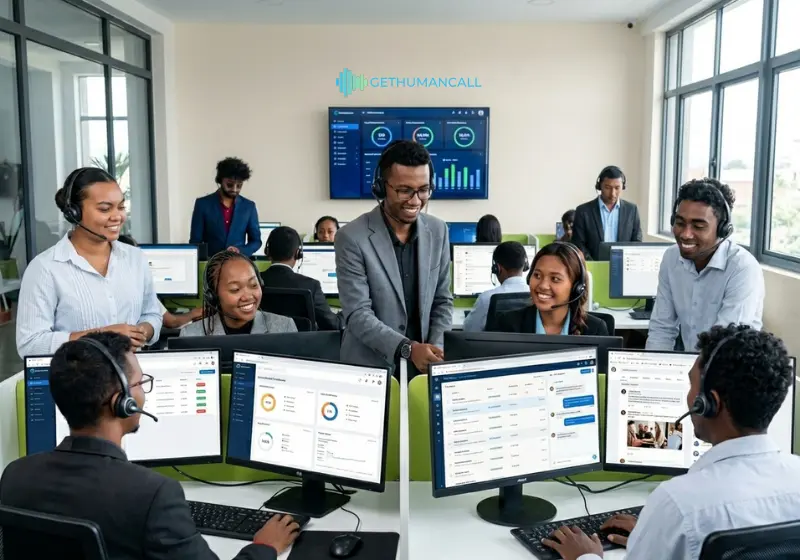
Omnichannel Customer Support Outsourcing: A Complete Guide
Customers no longer stick to one channel to reach a business. They move from chat to phone, then to WhatsApp or social media, sometimes within the same request. For many companies, building the infrastructure, teams, and tools needed to keep up with this behavior in-house is a heavy and risky investment. That is why a growing number of organizations are turning to omnichannel customer support outsourcing, an approach that combines human expertise, connected technology, and operational flexibility.
This guide explains what this model actually involves, why it is becoming essential, and how to choose a partner capable of delivering it without compromising the quality of the customer relationship.
What Is Omnichannel Customer Support Outsourcing?
Omnichannel customer support outsourcing means entrusting the management of every customer communication channel, chat, email, phone, social media, and messaging apps, to an external provider, while making sure those channels stay connected to each other.
Unlike outsourcing that focuses on a single point of contact, this model relies on continuity of information. A customer who starts a conversation on live chat and continues it later by email should be recognized instantly, without repeating their request. It is this continuity, not simply being present on multiple channels, that separates true omnichannel outsourcing from a fragmented setup.
Omnichannel Outsourcing vs. Multichannel Outsourcing
These two models are often confused, yet the difference has a direct impact on customer satisfaction.
In an outsourced multichannel model, each channel operates independently, often with its own queues and sometimes its own teams. In an outsourced omnichannel model, every channel shares the same customer database, giving agents access to the full interaction history regardless of which channel the customer used to reach out.
Why Businesses Outsource Omnichannel Customer Support
Companies no longer outsource purely to cut costs. The decision now responds to broader concerns around competitiveness and operational resilience.
Lowering Costs Without Sacrificing Quality
Building an omnichannel infrastructure in-house requires technology investment, hiring, ongoing training, and constant supervision. Outsourcing turns these fixed costs into variable ones, scaled to actual activity volume. This budget flexibility is especially valuable for businesses facing seasonal peaks or rapid growth.
Accessing an Infrastructure That Is Already Live
A specialized provider typically already runs omnichannel platforms connected to customer relationship management (CRM) systems and data analytics tools. This spares the client company from investing in expensive tools and managing their technical integration internally.
Gaining Flexibility and Scalability
An external partner can quickly scale staffing and resources up or down based on demand, without the constraints tied to internal hiring or HR management. This agility becomes a decisive advantage during a product launch, a marketing campaign, or geographic expansion.
Strengthening Customer Satisfaction and Loyalty
The global outsourced customer support market keeps growing, driven in part by widespread adoption of omnichannel models among specialized providers. A significant share of outsourcing providers have already connected their voice, email, chat, and social platforms into a single, unified system, which reflects a structural shift in the industry rather than a passing trend. For client businesses, this translates into faster first-contact resolution and stronger customer loyalty.
How to Choose an Omnichannel Outsourcing Partner
Choosing a provider should never come down to comparing rates alone. Several technical and human criteria need to be evaluated before signing on.
Assessing Real Channel Coverage
It is not enough for a provider to offer several channels. They need to demonstrate that these channels are genuinely interconnected, with a centralized customer history accessible in real time by every agent, regardless of the channel used.
Checking CRM and Data Integration Quality
The value of omnichannel support depends on data. A good partner should be able to integrate with the company's existing CRM tools, keep data updated in real time, and make it accessible to the relevant teams without creating new data silos.
Reviewing Security and Compliance Guarantees
Centralizing customer data across multiple channels raises the security stakes. It is essential to check the provider's authentication protocols, certifications, and compliance with data protection regulations in force.
Not Overlooking the Human Side
Technology makes it easier to connect channels, but agents are the ones handling the most sensitive moments, particularly when a customer is frustrated or confused. A partner that trains its teams in active listening and de-escalation often makes the difference between a support operation that simply functions and one that actually builds loyalty.
Challenges to Anticipate Before Outsourcing
Omnichannel customer support outsourcing delivers real benefits, but getting it right takes careful preparation. Three challenges come up most often:
- Integrating existing systems with the provider's tools, which can take time if the architectures are not compatible
- Aligning internal processes, particularly between marketing, sales, and customer service, to avoid sending conflicting messages
- Choosing the right technologies, in a market where omnichannel solutions evolve quickly
Anticipating these points during the partner selection phase significantly reduces the risk of disappointment after launch.
The Growing Role of AI in Omnichannel Outsourcing
Artificial intelligence is reshaping how outsourced providers manage high volumes of interactions, without replacing human judgment on complex requests.
Automating Low-Value Tasks
Chatbots and intelligent routing systems handle simple, repetitive questions automatically, freeing up agent time for requests that require human judgment.
Supporting Agents With Generative AI
A growing number of providers are equipping their agents with generative AI tools that can summarize a previous conversation, suggest an appropriate response, or surface a relevant knowledge base article, speeding up handling time without hurting the quality the customer perceives.
Catching Weak Signals Through Sentiment Analysis
Sentiment analysis helps identify a frustrated customer or a high-risk situation in real time, so the case can be prioritized or routed to an experienced agent before it escalates further.
Measuring the Success of Omnichannel Outsourcing
First-contact resolution rate and average handling time remain useful indicators, but they are no longer enough on their own to evaluate an outsourced omnichannel setup. It is worth tracking as well:
- Customer satisfaction score (CSAT), by channel and overall
- Channel-switching frequency during a single request, which signals friction in the journey
- Workload and ticket distribution across agents
- Customer retention rate over time
Analyzed together, these metrics allow the strategy to be adjusted and give internal stakeholders a clear, data-backed case for the value of outsourcing.
GetHumanCall's Approach: Omnichannel Outsourcing Built Around People
At GetHumanCall, omnichannel customer support outsourcing is not just about connecting channels technically. The focus is on trained teams that keep the context of a conversation intact no matter which channel a customer uses, supported by tools that reduce repetitive work rather than replace human judgment. For many businesses, this combination of connected infrastructure and human-centered support remains the deciding factor when choosing an outsourcing partner.
Outsourcing Without Losing the Human Touch
Omnichannel customer support outsourcing is no longer an option reserved for large companies with sizable technology budgets. It has become a practical answer to a challenge every organization now shares: delivering a consistent experience across an ever-growing number of channels, without multiplying fixed costs or operational risk.
Getting it right depends less on the tools chosen than on the provider's ability to combine connected data, solid processes, and genuine human quality in every interaction. Businesses that choose their partner on these criteria, rather than price alone, will be best positioned to turn customer support into a real competitive advantage.