
.png)



Beyond the IVR: Building a Human-Centric Inbound Call Centre Strategy for Modern Business Growth
There is a persistent myth in modern business circles: that the phone call is dying. The data, however, tells a rather different story. When something genuinely matters — a delayed order, a billing dispute, a sensitive corporate enquiry — people still reach for the phone, because they want to talk to another human being. And yet, many businesses continue to treat their inbound call centre as a cost to be minimised rather than a revenue protection and generation hub. That is a costly mistake.
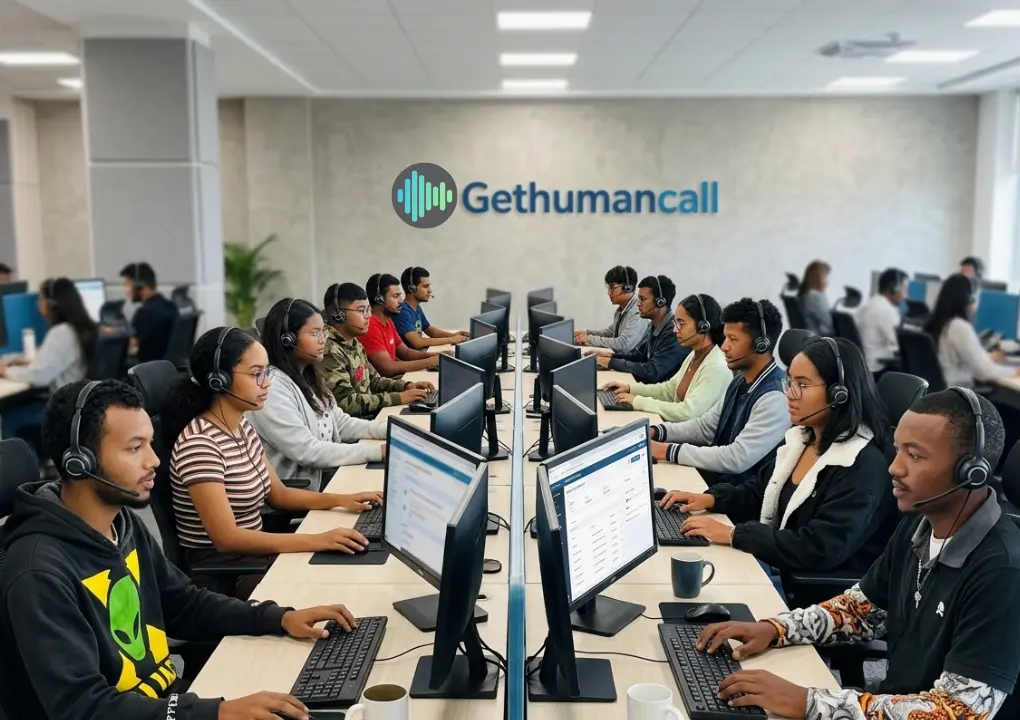
The best inbound call centre services in 2026 blend intelligent technology with authentic human delivery — and that is precisely the philosophy at the heart of GetHumanCall. By combining professional, Madagascar-based agents with deep expertise in the UK and European markets, GetHumanCall delivers support that feels genuinely local — responsive, culturally fluent, and rooted in authentic human connection.
What Are Inbound Call Centre Services? (And Why They Matter More Than Ever)
Before exploring strategy, it is worth establishing a clear foundation. The term "inbound call centre" is often used loosely, and its modern meaning is considerably broader — and more strategically significant — than many business owners realise.
Defining the Inbound Model
At its most basic, inbound call centre services cover any interaction initiated by the customer rather than the business. This is the defining distinction from outbound operations, which involve agents proactively reaching out. Inbound encompasses order taking, general customer support, technical helpdesk queries, complaints handling, and the management of complex corporate enquiries that cannot be resolved through a FAQ page.
What has changed profoundly in recent years is the scope of what "inbound" means in practice. Modern inbound call centre solutions are not limited to voice. They are omnichannel by design, integrating email, web chat, social media messages, and even SMS into a unified queue. A customer might begin an enquiry on social media, continue it via web chat, and resolve it over the phone — and a high-performing inbound service handles all three touchpoints without missing a beat.
The Shift from Cost Centre to Strategic Asset
For too long, the call centre was viewed through a purely operational lens — a necessary overhead to be staffed as leanly as possible. That thinking is not just outdated; it is actively counterproductive. Every inbound interaction is a data point. Every call, email response, or social exchange contains insights about what customers value, what is frustrating them, and where the business has gaps.
When businesses evaluate their long-term growth, they often need to decide between call center and contact center models to ensure their infrastructure can actually capture and act on these insights. This shift in perspective transforms the inbound centre from a reactive service into a genuine competitive advantage.
Core Components of High-Performing Inbound Call Centre Solutions
Understanding what separates a good inbound service from a truly exceptional one requires a look at both the technology stack and the human layer that brings it to life. These two elements are not in competition — they are complementary, and neither is sufficient on its own.
Intelligent Call Flow and Routing
The backbone of any well-run inbound operation is its call routing infrastructure. Automatic Call Distribution (ACD) systems intelligently direct incoming calls to the most appropriate agent based on skill set, availability, and call history. Combined with Interactive Voice Response (IVR) — those familiar menu systems that help triage call types — these tools ensure that customers reach the right person as quickly as possible.
Here is the critical nuance, though: technology routes the call, but it is the agent's experience, empathy, and professional handling that determines whether the customer stays on the line — and leaves satisfied. An IVR can be perfectly configured and still result in a poor customer experience if the agent who picks up lacks the skills or the motivation to deliver. The human element is not a supplement to the technology; it is the whole point.
Omnichannel Integration: Voice, Email, Web, and Social
Modern inbound call centre platforms bring together multiple customer communication channels into a single, coherent management system. Agents can respond to a complaint on social media, follow up via email, and take a call about the same issue — all within one interface, with full context preserved throughout.
At moderns contacts centers agents are trained to operate fluidly across all of these channels. Whether responding to a detailed corporate enquiry received by mail, engaging with a frustrated customer on social, or handling a high-value ecommerce call, the brand voice remains consistent. That consistency is not accidental — it is the product of rigorous training and a genuine understanding of what each client's brand represents.
Real-Time Analytics and Reporting
Any credible inbound service partner should offer clients access to live and historical performance dashboards. These typically include call volume trends, average handling times, first-call resolution rates, customer satisfaction scores, and agent performance metrics. For business owners and operations managers, this visibility is invaluable — it enables informed staffing decisions, highlights training needs, and provides the data required to demonstrate the ROI of the service to senior leadership.
More importantly, when aggregated over time, this data becomes a source of strategic insights that goes well beyond the call centre itself. It reveals seasonal demand patterns, identifies recurring customer pain points, and flags product or process issues that might otherwise go unnoticed.
Why "Human Delivery" Is the Ultimate Differentiator in Inbound Call Handling
Technology is the infrastructure. Human delivery is the experience. In a market where most inbound platforms offer broadly similar features, the real differentiator is consistently the quality of the people behind the screens and phones. This is the core argument at the heart of GetHumanCall's approach.
The Empathy Gap in Automated Worlds
There is a growing empathy gap in customer service — a widening disconnect between what automation can deliver and what customers actually need in moments of genuine difficulty. AI-powered chatbots and automated response systems are genuinely useful for simple, repetitive queries. But they fall apart, often quite visibly, when faced with ambiguity, emotional complexity, or situations that require judgment rather than pattern-matching.
Research consistently shows that the vast majority of consumers — particularly those in the UK and broader European markets — prefer to speak with a real person for complex service issues. This is not a demographic preference limited to older customers; it is a broadly shared human response to stress. When an ecommerce order goes missing, when a business-critical service fails, or when a customer feels they have not been heard, what they want is a conversation — not a ticket number.
The Madagascar Advantage: Fluency Meets Flexibility
GetHumanCall's decision to base its operations in Madagascar is not simply a cost consideration — though the affordability advantage compared to UK-based staffing is significant. Madagascar offers something rarer: a highly educated, French and English-speaking workforce with neutral accents, strong cultural affinity with European clients, and a professional work ethic that is difficult to replicate elsewhere at comparable cost.
This location provides clients with a flexible staffing model that scales to demand. Ecommerce businesses navigating the surge of peak trading periods, or corporate clients managing irregular volumes of inbound enquiries, can adjust resource levels without the overhead and complexity of expanding a local team. The result is a professional service that feels like an extension of the business rather than an external supplier — and that is a meaningful distinction.
Agents as Brand Ambassadors
The most important reframing in modern inbound strategy is this: a call is not just a transaction — it is a moment of truth for the brand. Every time an agent picks up the phone, answers a web enquiry, or responds to a social media message on behalf of a client, they are representing that business's values, tone, and reputation.
GetHumanCall invests heavily in agent training that goes beyond scripts. Rather than simply equipping agents with answers, the focus is on instilling a genuine understanding of each client's brand ethos — what they stand for, how they communicate, and what kind of experience they want their customers to leave with. This approach turns inbound handling into brand delivery, and it is a shift that customers notice, even when they cannot quite articulate why.
The Inbound Call Centre Checklist: What to Look For in an Outsourcing Partner
Choosing an inbound call centre partner is one of the more consequential decisions a business can make. The following criteria provide a practical framework for evaluating potential providers — and for understanding why the bar should be set high.
1. Multi-Channel Proficiency
A partner that handles only phone calls is operating with one hand tied behind their back. The modern customer journey is non-linear, and your inbound service needs to reflect that. Assess whether a potential partner can manage email, web chat, social media responses, and voice within a unified system — and whether their agents are trained to maintain a consistent brand voice across all of them.
2. Scalability and Flexibility
Can the service scale up rapidly during peak ecommerce periods? Can it flex back down efficiently in quieter months? Staffing flexibility is particularly critical for retail and ecommerce businesses, where call volumes during peak trading periods can multiply several times over in the space of a few weeks. A rigid, fixed-resource model is not fit for purpose in these environments.
3. Cultural Fit: The UK and EU Factor
This is frequently underestimated, and it matters enormously. Agents handling calls and enquiries on behalf of UK and European businesses need to understand local communication norms, humour, and etiquette. A technically proficient agent who misreads the emotional register of a conversation — or who is unfamiliar with the cultural context of a complaint — will undermine the customer experience regardless of how good the technology is behind them.
4. Data Security and Technology Infrastructure
Any inbound partner handling customer data on behalf of a UK or EU business must operate within a robust data security framework. This means secure platforms, clearly defined data retention policies, and a demonstrable understanding of relevant regulatory requirements. Ask potential partners directly about their technology stack, their security certifications, and how they protect client and customer data.
5. Employee Experience and Agent Retention
This is the criterion that most businesses fail to ask about — and it is arguably the most revealing. High agent turnover is one of the most reliable indicators of a poorly run call centre, and it has a direct and measurable impact on service quality. An organisation that invests in its people — in training, in culture, in career development — will consistently outperform one that treats agents as interchangeable resources. Ask about retention rates. Ask about company culture. The answers will tell you more than any sales presentation.
How Different Industries Leverage Inbound Call Centre Services
One of the strengths of a well-designed inbound service is its versatility across sectors. The underlying skills — professional communication, empathy, accurate information delivery — apply across industries, even as the specific requirements vary significantly.
E-commerce and Retail
For e-commerce businesses, the inbound channel is mission-critical during peak periods. Order enquiries, delivery updates, returns management, and complaints all surge simultaneously, and the quality of the response in these moments has a direct bearing on repeat purchase rates and online reviews. But inbound is not only reactive in this context — skilled agents can and should be identifying upselling and cross-selling opportunities during inbound sales calls, turning a service interaction into a revenue moment.
Key inbound functions for e-commerce and retail include:
• Order management — tracking, amendments, cancellations, and confirmations
• Returns and refunds handling — managing customer expectations with clarity and efficiency
• Delivery enquiries — coordinating with logistics teams to provide accurate, real-time responses
• Complaint resolution — de-escalating frustration and rebuilding trust after service failures
Corporate and Professional Services
In B2B environments, inbound call centre services take on a different character. The stakes per interaction are typically higher, the enquiries more complex, and the expectations around professionalism and discretion considerably more demanding. Corporate clients expect agents who can navigate nuanced conversations, qualify inbound leads accurately, and represent the business with the kind of polish that reflects well in a boardroom context.
GetHumanCall's agents are trained specifically for this environment, handling everything from B2B lead qualification and client support to the management of sensitive corporate correspondence and mail. The ability to operate at this level — professionally, flexibly, and with a genuine understanding of UK business culture — is a core part of what differentiates a specialist inbound partner from a generic call-handling service.
Healthcare and Public Sector
Few sectors demand more of an inbound service than healthcare. Patients and service users are often vulnerable, anxious, or in need of urgent assistance, and the margin for error is negligible. Appointment scheduling, signposting to appropriate services, and the management of sensitive digital correspondence all require agents who are not only technically proficient but genuinely compassionate and discreet.
For public sector organisations, the inbound channel also plays a vital role in managing the volume of citizen enquiries that cannot be handled through self-service alone. Complex eligibility queries, service complaints, and appointment management all require the kind of patient, informed handling that only a well-trained human agent can reliably deliver.
Turning Inbound Calls into Competitive Advantage
The central argument of this guide can be stated simply: technology creates the conditions for great service, but people deliver it. The most sophisticated call routing system in the world cannot compensate for an under-trained, unmotivated, or culturally misaligned agent. And the most skilled, empathetic agent in the world will be hamstrung without the right platforms, data, and support behind them.
The businesses that are building real competitive advantage through their inbound channel are those that have stopped treating these two elements as a trade-off and started investing in both. They have recognised that the customer experience begins the moment someone decides to pick up the phone — and that every subsequent interaction, across every channel, is an opportunity to deepen loyalty or lose it.
GetHumanCall was built around this understanding. By combining professional, culturally fluent Madagascar-based agents with the technology infrastructure and sector-specific expertise to serve UK and European clients at the highest level, it offers something that most outsourcing providers simply cannot: an inbound service that feels genuinely local, because the people behind it genuinely understand your market.
Whether you are managing ecommerce orders at scale, handling sensitive corporate enquiries, or looking to transform your customer support from a cost centre into a growth driver, the right inbound call centre partner can make that transformation possible. The conversation starts with a single enquiry — and there is no better time to have it.
Ready to explore what a tailored inbound strategy could look like for your business? Contact GetHumanCall today and speak with a specialist who understands your sector.
.webp)