
.png)


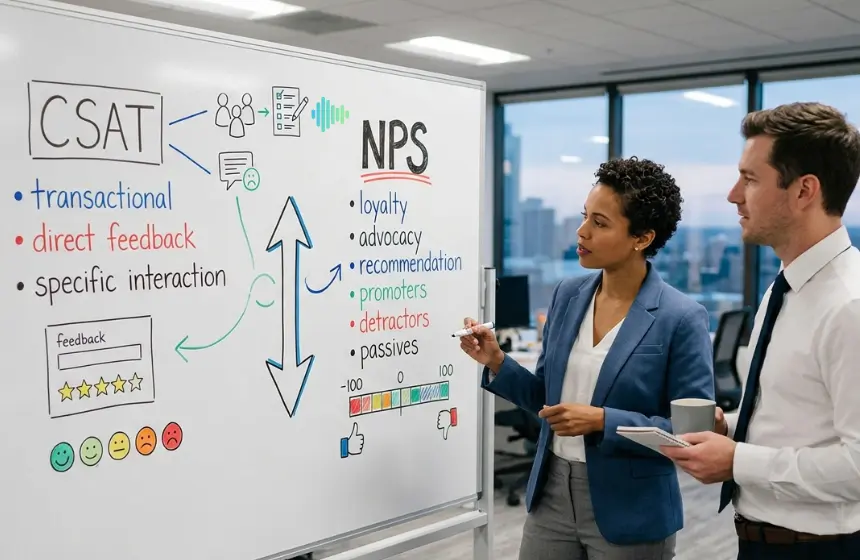

The Ultimate Guide to Customer Retention Management Software in 2026
Everything you need to know to stop churn, build loyalty, and turn your data into revenue, with the right tools and the right people.
For years, the growth playbook was simple: acquire, acquire, acquire. But in 2026, the math has fundamentally changed. Ad costs have soared, organic reach has shrunk, and investors are demanding efficient growth — not just raw numbers. The companies winning today are the ones who finally understand that the most valuable customer is the one you already have.
That's where customer retention management software enters the picture. It's no longer a nice-to-have; it's the operational backbone of any serious subscription, SaaS, or service business. But here's the nuance most vendors won't tell you: the software alone won't save you.
Definition
Customer retention management software is a technology suite designed to track customer behavior, identify churn risks, and automate loyalty workflows to increase Lifetime Value (LTV). It centralizes customer data, generates health scores, and triggers proactive interventions — giving teams the intelligence to act before a customer leaves.
Key Takeaway
The best retention "stack" isn't just software — it's a hybrid of data intelligence and human empathy. Software surfaces the right signal at the right time. Trained human agents turn that signal into a genuine conversation that saves the relationship. This guide shows you how to build both layers effectively.
Why Retention Software Is Non-Negotiable Today
The retention conversation used to be theoretical. Today, it's existential. Here's why every data-driven team is prioritizing it.
The Cost of Acquisition vs. Retention
The research is unambiguous: acquiring a new customer costs 5 to 25 times more than retaining an existing one (Harvard Business Review). And a mere 5% increase in retention rates can boost profits by 25% to 95%. When you factor in CAC payback periods, onboarding costs, and sales cycles, the ROI argument for retention investment becomes overwhelming.
- 5-25x more expensibe to acquire than retain a customer,
- +95% potential profit boost from a 5% retention increase,
- 67% more spent by repeat customer vs. New ones,
- 60-70% probability of selling to an existing customer.
Data Centralization: From Spreadsheets to a Unified Customer View
Most businesses are flying blind on churn. Usage data sits in the product, billing data in Stripe, support tickets in Zendesk, and sales notes in a CRM — all disconnected. Customer retention software solves this by creating a single source of truth: one unified profile per account that aggregates every signal, from login frequency to NPS score to payment failures.
Scalability: Managing Thousands of Accounts Without Thousands of CSMs
A human Customer Success Manager can realistically manage 50 to 200 accounts at depth. Software scales this by an order of magnitude. Automated health scoring, triggered alerts, and playbook workflows allow a lean team to monitor thousands of accounts in real time — flagging the ones that actually need a human touch.
Top 10 Customer Retention Management Software in 2026
This section covers the platforms that dominate the market today — from enterprise-grade solutions to focused niche tools. Each has a specific strength; the right choice depends on your team size, product type, and budget.
1- Gainsight
Enterprise Gold Standard
Gainsight remains the undisputed leader for large B2B SaaS and enterprise businesses. Its deep health scoring engine, lifecycle management modules, and revenue intelligence features make it the go-to for companies managing complex, high-value accounts. It requires a dedicated CS ops team to configure properly, but the depth of insight is unmatched. Best for companies with 500+ accounts and a structured CSM organization.
2- ChurnZero

Best for Real-Time Health Scoring
ChurnZero excels at surfacing churn risk in real time through its highly customizable "ChurnScores." It's purpose-built for subscription businesses and offers excellent in-app communication tools that let your team engage customers at the precise moment of disengagement. Its intuitive UI makes it significantly easier to onboard than Gainsight, while still offering enterprise-grade automation and segmentation capabilities.
3- HubSpot Service Hub
Best Integrated CRM & Support
For teams already inside the HubSpot ecosystem, Service Hub is the natural retention layer. Its strength lies in seamless data flow between Marketing, Sales, and Service — eliminating silos and giving every team member a complete customer picture. It's ideal for SMBs and mid-market companies that want retention capabilities without the complexity and cost of a dedicated platform like Gainsight.
4- ProfitWell Retain

Best for Involuntary Churn
A specialized, often underrated tool: ProfitWell Retain targets involuntary churn — revenue lost due to failed payments, expired cards, and billing friction rather than deliberate cancellations. It uses an AI-powered dunning system with smart retry logic and personalized communication sequences to recover failed charges automatically. For subscription businesses, this single tool can recover 20–40% of revenue that would otherwise be silently lost.
5- Intercom

Best for In-App Proactive Engagement
Intercom has evolved from a live chat tool into a full customer engagement platform. Its standout retention feature is the ability to trigger targeted in-app messages, tours, and checklists based on real-time behavioral data — reaching users at the exact moment they're struggling or disengaging. For product-led growth companies, Intercom's combination of proactive messaging and automated support is a powerful churn prevention layer.
6- Custify

Best Value for Mid-Market
Custify delivers Gainsight-level features — health scoring, playbooks, 360° customer views — at a fraction of the price. It's specifically designed for SaaS companies that have outgrown basic CRM but aren't ready for enterprise platforms. Its simple onboarding and clean interface make it one of the fastest platforms to deploy, with measurable ROI typically visible within the first quarter of use.
7- Totango
Best for Modular Flexibility
Totango's "Composable Customer Success" architecture lets teams activate only the modules they need — journey mapping, segmentation, analytics, or collaboration — and scale functionality as the business grows. This modular approach makes it unusually flexible across different business models, from high-touch enterprise to low-touch, high-volume product-led businesses, without paying for features that aren't relevant.
8- Planhat

Best Revenue Intelligence & Collaboration
Planhat bridges the gap between Customer Success and Revenue teams by combining deep CS analytics with revenue forecasting and expansion tracking. Its collaborative workspace is particularly strong for CS teams that also own upsell and renewal motions, making it a natural fit for businesses where retention and revenue growth are tightly linked functions. Its dashboards are also among the most visually polished in the category.
9- CleverTap
Best for Mobile & Consumer Apps
CleverTap is the retention platform of choice for mobile-first businesses — apps, e-commerce, fintech, and digital media. It combines behavioral analytics, segmentation, and multi-channel campaign automation (push notifications, email, in-app, SMS) into a single platform designed for consumer scale. Its AI-powered "Clever.AI" predicts user lifetime and automates hyper-personalized re-engagement campaigns without manual segmentation work.
10- Zendesk Sunshine

Best for Support-Led Retention
Zendesk Sunshine transforms the support function into a retention engine. Built on a flexible open CRM, it unifies support ticket history, customer data, and conversation context to give support agents a complete picture of every customer. For businesses where retention is primarily driven by the quality of customer service — rather than proactive CS — Sunshine's deep integration with the Zendesk ecosystem makes it the most logical choice.
Key Features to Look For in Retention Software
Not all retention platforms are built the same. Before you sign a contract, evaluate each tool against these four foundational capabilities that separate category leaders from expensive noise.
Predictive Analytics & AI
The ability to flag "at-risk" customers before they decide to leave. Look for machine learning models trained on your own behavioral data, not just generic benchmarks. The best platforms provide explainable churn scores — not just a number, but the specific factors driving the risk.
Health Scoring
Customizable health metrics that combine product usage, engagement depth, support sentiment, billing status, and NPS into a single score. The key word is customizable — a one-size-fits-all health model is nearly useless for businesses with unique usage patterns.
Automated Playbooks
Workflow engines that trigger specific actions — emails, tasks, Slack alerts, or escalations to a human agent — based on behavioral triggers. A good playbook system should handle both reactive alerts (health score drops below 40) and proactive sequences (onboarding milestone not reached in 14 days).
Integration Capabilities
Your retention platform is only as powerful as the data it ingests. Prioritize tools with native integrations to your CRM (Salesforce, HubSpot), billing system (Stripe, Chargebee), communication stack (Slack, email), and product analytics (Mixpanel, Amplitude). Open APIs are a must for custom data sources.
The "Automation Paradox": Why Software Isn't Enough
When the Algorithm Hits a Wall
Here's the uncomfortable truth that no software vendor will put in their deck: software can detect a "red alert," but it cannot handle a sensitive, angry, or emotionally complex human conversation.
A perfectly designed automated playbook can identify a churning customer, schedule an email, and log a task for a CSM. But when that customer picks up the phone furious about a billing error, or when an enterprise account is silently evaluating a competitor, no algorithm can replace the judgment, empathy, and real-time adaptability of a skilled human agent.
The Empathy Gap
Automated "We miss you" emails are, at best, ignored. At worst, they actively damage the relationship by reinforcing the customer's feeling that they're just a number in a system. When a customer is at their most vulnerable — confused, frustrated, or already halfway out the door — a generic sequence doesn't save the account. A genuine human conversation does.
The core insight: Software provides the map. It tells you precisely which accounts are at risk, why, and when. But you still need skilled drivers who know how to navigate the terrain, handle the unexpected, and make the journey worth taking for the customer.
Strategic Execution Requires Human Judgment
The highest-value retention moments — a renewal negotiation, a de-escalation call, a strategic business review — require preparation, rapport, and nuanced communication that no automation tool can replicate. This is the gap that specialist retention teams exist to fill. And it's the gap that GetHumanCall was built to bridge at scale.
How to Build a Hybrid Retention Strategy
The most effective retention operations in 2026 don't choose between software and people — they integrate both into a seamless, data-driven, human-delivered system. Here's how to build it.
The Tech Stack — The "Brain"
Choose a retention platform matched to your business size and model. Enterprise B2B? Start with Gainsight or Planhat. Mid-market SaaS? Custify or ChurnZero. Consumer app? CleverTap. Configure health scores using your actual leading indicators of churn: for a SaaS product, that might be logins + feature adoption + seat utilization. For an e-commerce business, it's purchase frequency + support ticket sentiment. The software becomes your intelligence layer — processing thousands of data points simultaneously and surfacing actionable signals.
The Human-in-the-Loop — The "Hands"
Once the software identifies a risk, a human must own the response. This is where most companies underinvest — they buy the software but don't build the team to execute the plays. A dedicated retention team receives the software's alerts, reviews the customer context, and determines the best outreach approach: a warm call, a personalized email, an executive escalation, or a proactive check-in. The software tells them when and who; the human team decides how.
GetHumanCall Integration — Turning Data into Relationships
GetHumanCall's specialized agents plug directly into your retention software stack. When a health score drops below your defined threshold, GetHumanCall agents — fully briefed on the customer's history, product usage, and risk factors — perform proactive outreach, handle high-touch support escalations, and execute manual "save" conversations. This isn't a generic call center. These are trained retention specialists who understand your product, your customer personas, and the language of customer success. The result: your software identifies the problem, and GetHumanCall solves it — at scale, 24/7, without you having to build an in-house retention department.
+30%
Higher "save rate" achieved when combining software automation with human expertise vs. automation alone. When a real person makes a warm, informed call to an at-risk customer within 24 hours of a risk signal, the save rate increases dramatically compared to an automated email sequence — regardless of how well-designed that sequence is.
Implementation: From Data to Action
Knowing which tools to use is one thing. Actually implementing a retention program that works is another. Follow this sequenced approach to avoid the most common pitfalls.
Step 1 — Audit Your Current Churn
Before selecting any software, understand where and why you're losing customers. Analyze cohort data to identify the moments of highest churn risk: is it the first 30 days (onboarding failure)? Month 6 (value realization gap)? At renewal (competitive displacement)? Segment your churned customers by type, tenure, and stated reason. This diagnostic work determines which software features you actually need — and prevents you from buying a complex enterprise platform when a focused tool would deliver better ROI faster.
Step 2 — Choose Your Tool Based on Business Size
Match the complexity of the platform to the maturity of your retention operations. A 10-person startup doesn't need Gainsight's full suite — it needs a tool that provides immediate visibility without a 6-month implementation. A 200-person company managing 5,000 enterprise accounts, on the other hand, needs a platform that can support sophisticated segmentation, multi-stakeholder tracking, and forecast modeling. Use the software comparisons in Section 3 as a starting framework, then schedule demos with your top two or three candidates with your specific use cases clearly documented.
Step 3 — Outsource the Execution
Here's the calculation most businesses get wrong: they invest in software and then expect their existing team to absorb the execution workload. In practice, CS Managers are already stretched. Adding a proactive outreach queue on top of their existing book of business leads to nothing getting done systematically.
The build vs. buy decision: Building an in-house 24/7 retention team means recruiting, training, managing, and retaining specialized agents across multiple time zones — with all the associated overhead. Partnering with GetHumanCall delivers a fully trained, software-integrated retention team on a fraction of that budget, with the flexibility to scale capacity up or down as your customer base grows.
Frequently Asked Questions
What is the best customer retention management software for small businesses?
For small businesses (under 500 customers), HubSpot Service Hub and Custify are the strongest starting points. HubSpot is ideal if you're already using HubSpot CRM, as it adds retention capabilities without introducing a new system. Custify offers more dedicated CS features at a competitive price point. Both can be operational within days, not months. Avoid over-investing in enterprise platforms like Gainsight until you've scaled past 1,000+ managed accounts and have a dedicated CS function.
How do you measure the success of customer retention software?
The primary KPIs are gross revenue retention (GRR), net revenue retention (NRR), and customer churn rate. Beyond the top-line metrics, track: health score accuracy (are accounts flagged as "at-risk" actually churning?), playbook effectiveness (what percentage of triggered interventions result in a "save"?), and time-to-intervene (how quickly does your team respond to a risk alert?). Benchmark these metrics quarterly, before and after software implementation, to quantify ROI clearly.
Can I reduce churn without software?
Yes — but only to a limited extent, and it doesn't scale. A small, founder-led business with 50 customers can manage retention manually through personal relationships and spreadsheet tracking. But as soon as you cross 200–300 accounts, the signal-to-noise ratio in manual data makes it impossible to identify risk proactively. By the time a customer tells you they're leaving, you've already lost them. Software provides the early warning system that makes proactive retention possible at scale. The combination of software intelligence plus human execution — as offered through a GetHumanCall partnership — is what makes retention a compounding advantage rather than a reactive firefight.
How long does it take to implement customer retention software?
Implementation timelines vary widely by platform and data complexity. Mid-market tools like Custify or ChurnZero can be configured with basic health scores and playbooks in 4–8 weeks. Enterprise deployments of Gainsight typically require 3–6 months for full configuration and team enablement. The critical success factor isn't the software setup — it's the data integration work (connecting your CRM, billing system, and product analytics) and the internal change management to ensure your team actually uses the platform daily.
What's the difference between customer retention software and a CRM?
A CRM (Customer Relationship Management system) is primarily designed for managing the sales pipeline and customer contact records — it's built around the acquisition and deal-closing process. Customer retention software, by contrast, is built for the post-sale lifecycle: tracking product usage, measuring customer health, automating success workflows, and identifying churn risk. Many modern retention platforms integrate deeply with CRMs (Salesforce, HubSpot) to read sales data, but they serve a fundamentally different operational purpose.
Final Thoughts
Customer retention management software is one of the highest-ROI investments a growth-stage business can make in 2026. It replaces guesswork with precision, transforms reactive firefighting into proactive relationship management, and allows small teams to manage customer portfolios that would otherwise require an army of CSMs.
But the most important lesson of this guide is this: technology empowers your data. People empower your brand.
The platforms reviewed above will give you the intelligence to know which customers are at risk, why, and when. What they won't give you is the human conversation that rebuilds trust, the empathetic call that turns a cancellation into a renewal, or the proactive outreach that makes a customer feel like more than a row in a database.
That's the gap GetHumanCall fills — and it's the difference between a retention program that looks good on a dashboard and one that actually moves the needle on revenue.
Ready to Transform Retention Data Into Loyal Customers?
See how GetHumanCall combines top-tier software management with expert human agents to deliver save rates 30% higher than automation alone.
.webp)